




Overview
Reviving Setouchi for international travelers
Brief:
Setouchi City's only English tourism site/blog went offline in 2020, cutting the destination off from international travelers. I redesigned, built, and relaunched it solo (no engineers) and built it on Framer, so non-technical staff can maintain it.
Impact:
Setouchi City now has their first fully comprehensive English tourism site, closing the information gap and increasing its potential to convert visitor interest into real visits.
Key Insights
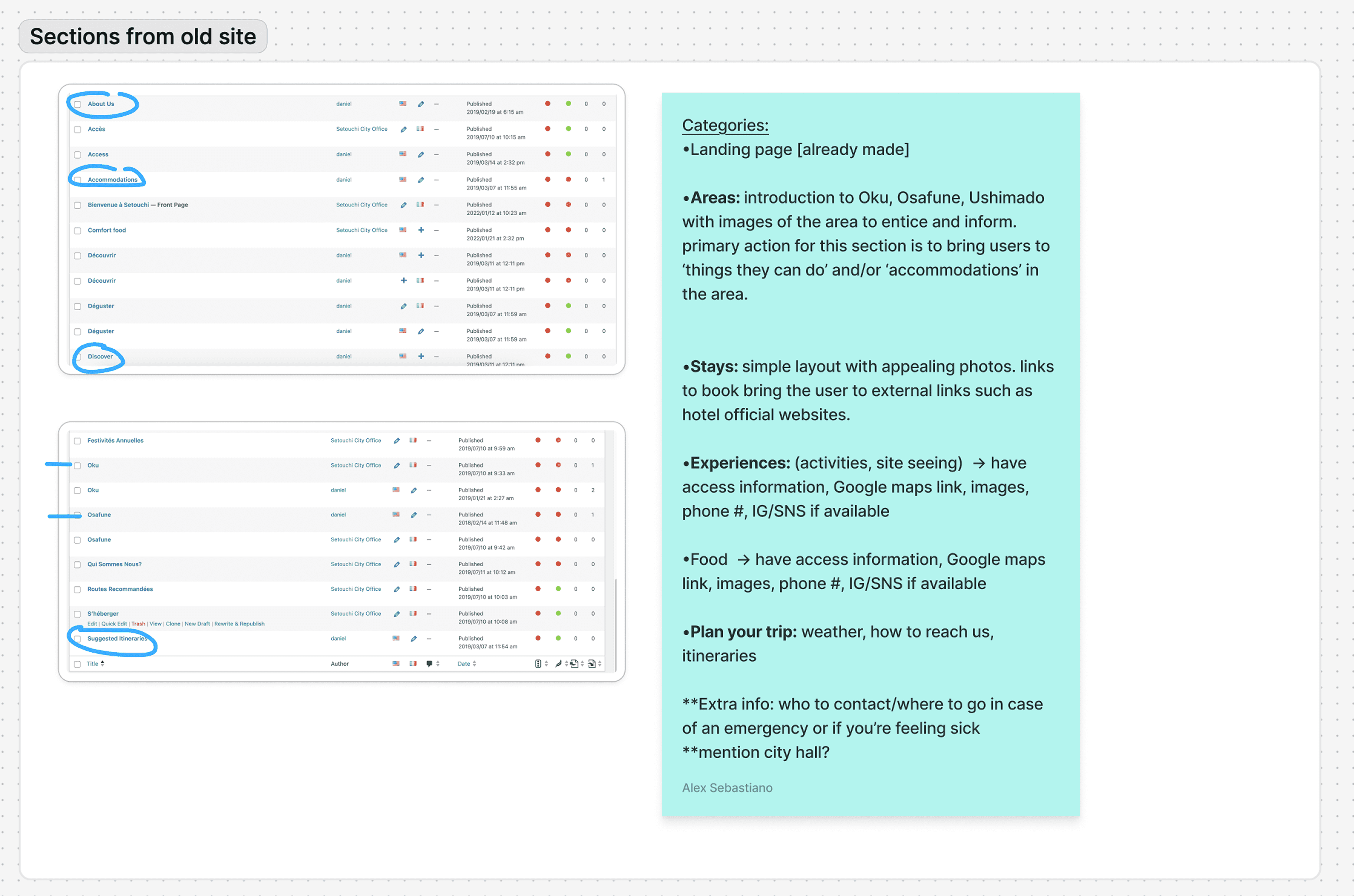
2 pain points from article research
Language gaps = no discovery or trust
Rural areas lack multilingual resources; machine translation is usually inaccurate
Poor IA and design = missed opportunities
Lack of details and poor site structure cause tourists to miss out on join local events, workshops, etc.
4 qualities of strong tourism websites
Distinct identity
High quality images and tailored copywriting to provide a strong identity
Easy planning
Clarity on seasonal expectations and interactive map features
Local involvement
Upcoming and yearly events with ample descriptions that appeal to overseas visitors
Quick scan
Important details are easy to find; avoid cognitive overload of text for users
Ideation
Homepage as the foundation
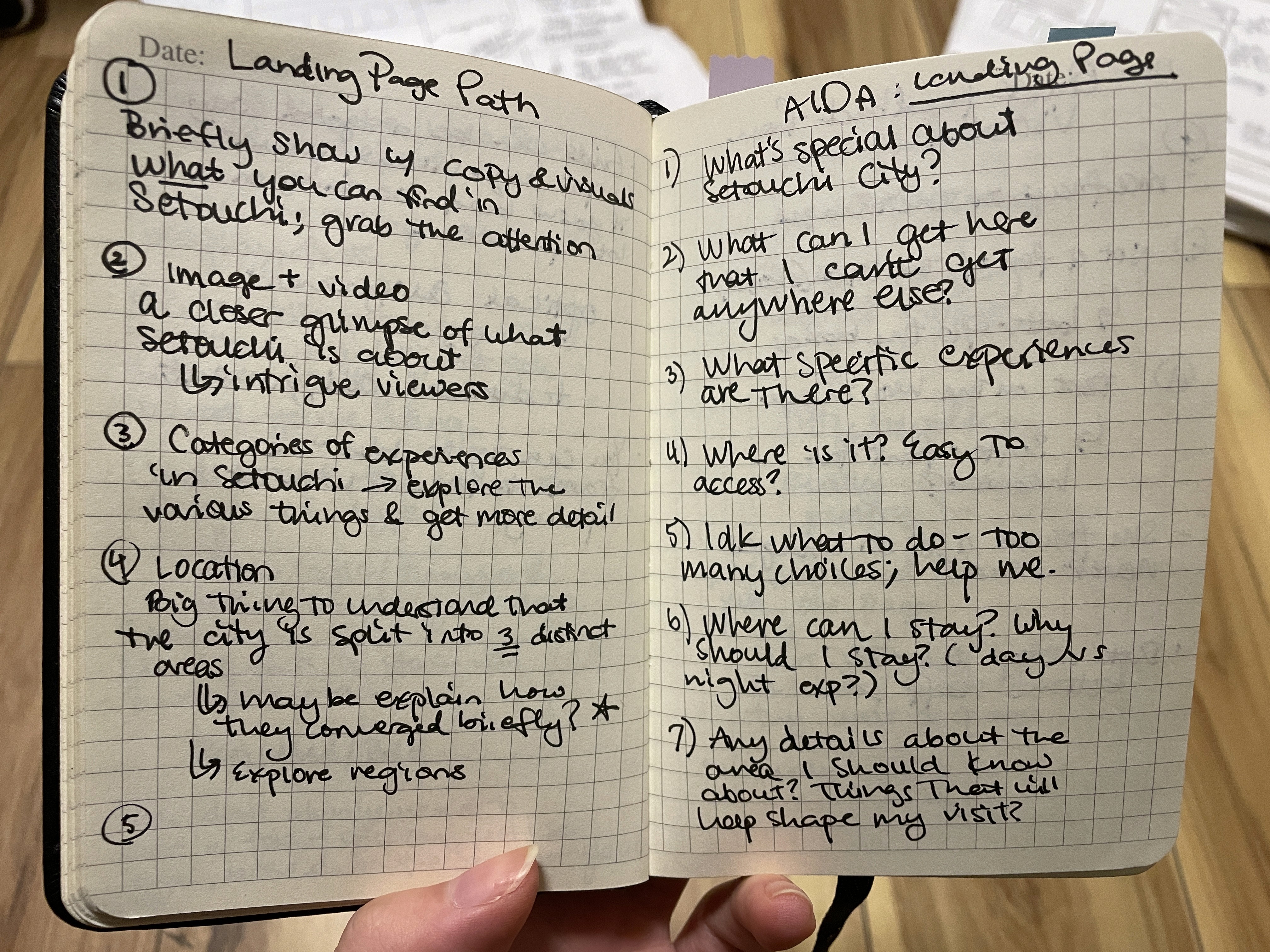
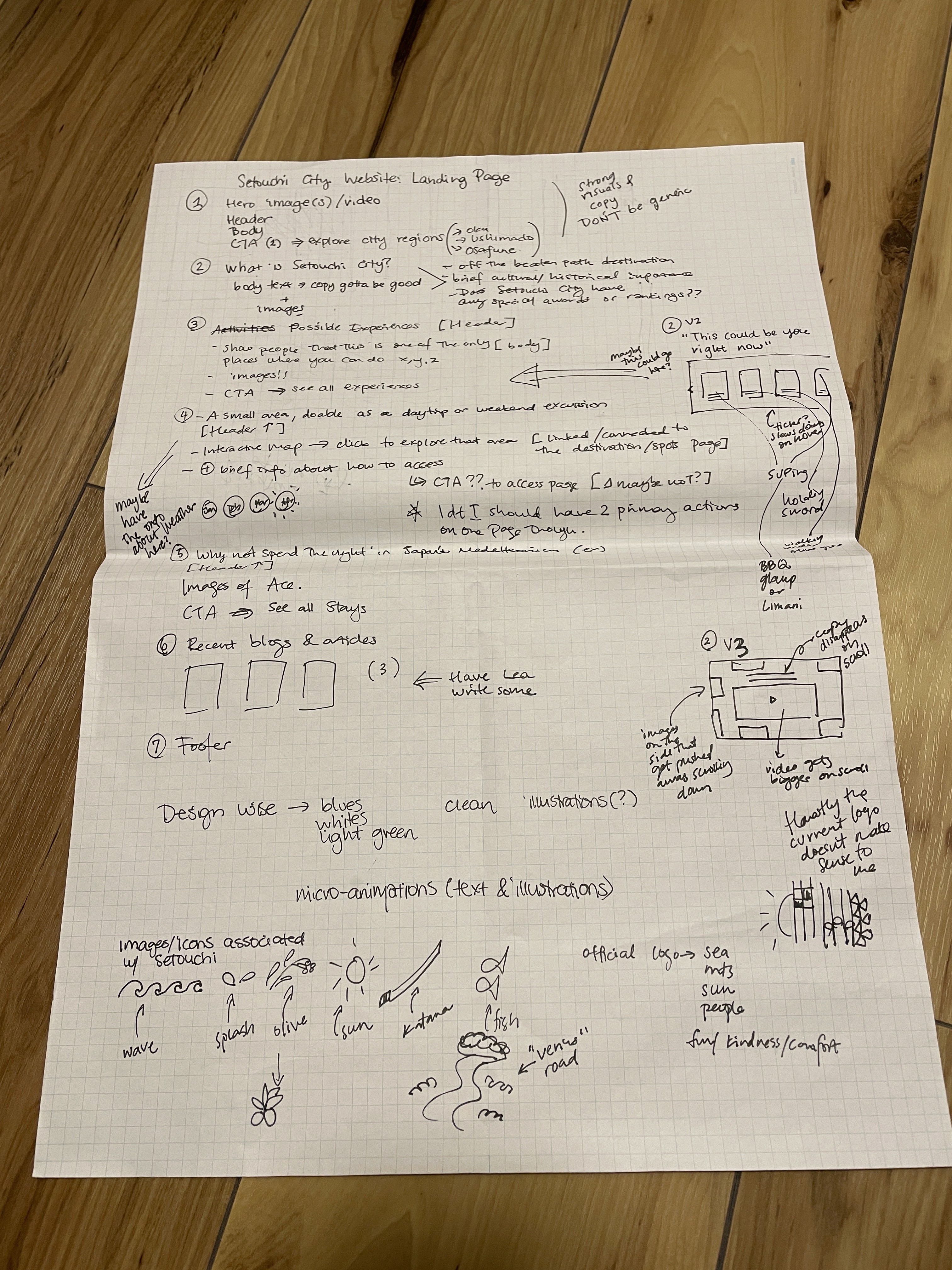
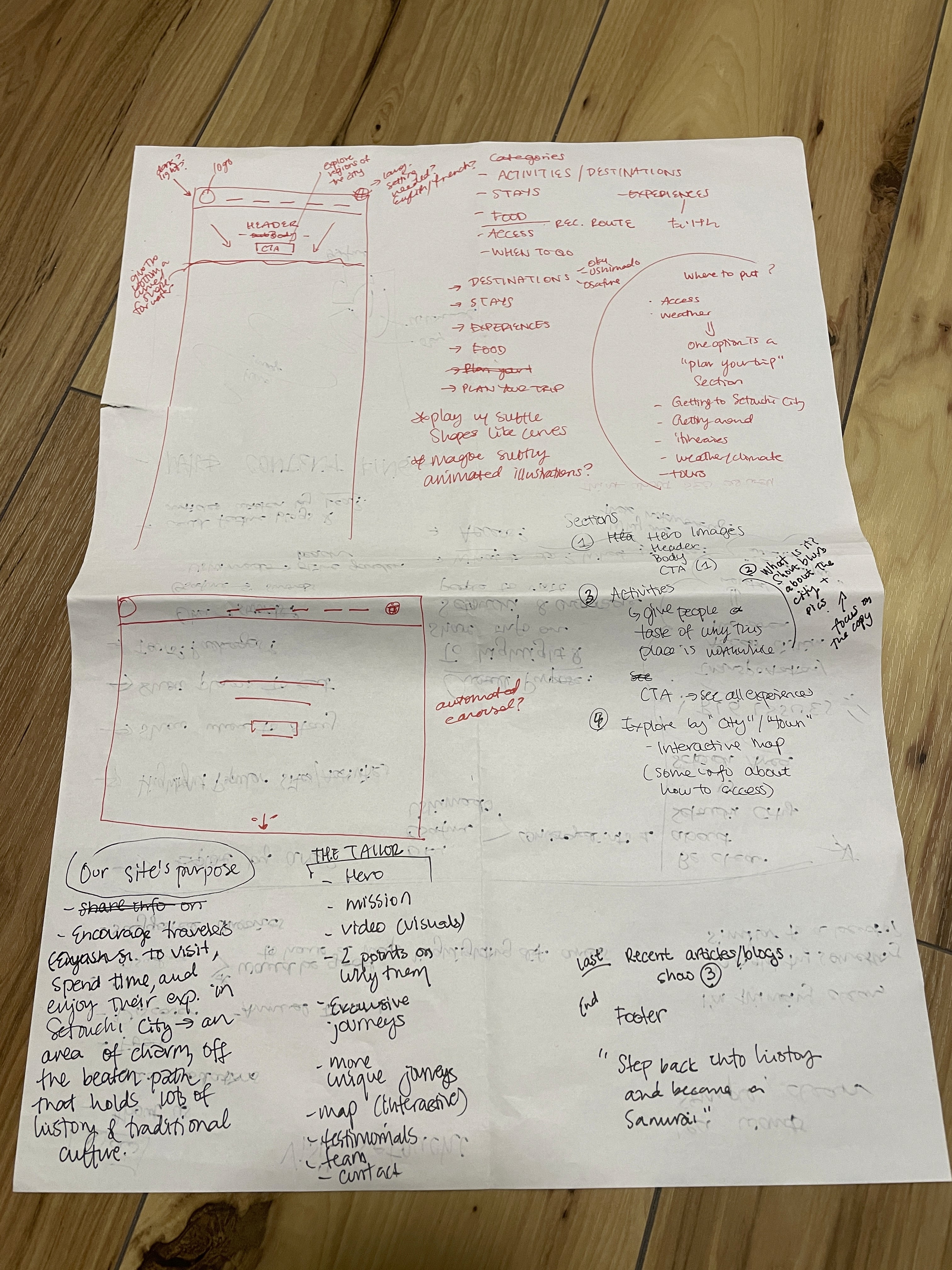
Through brainstorming, sketching and implementing AIDA principles, I decided to focus on the homepage's direction as it would lead the website's overall design and content structure. I included the following in the main design:
Top 5 Activities: Quick suggestions to reduce thinking time
6 Categories: Encourages exploration based on users' interests
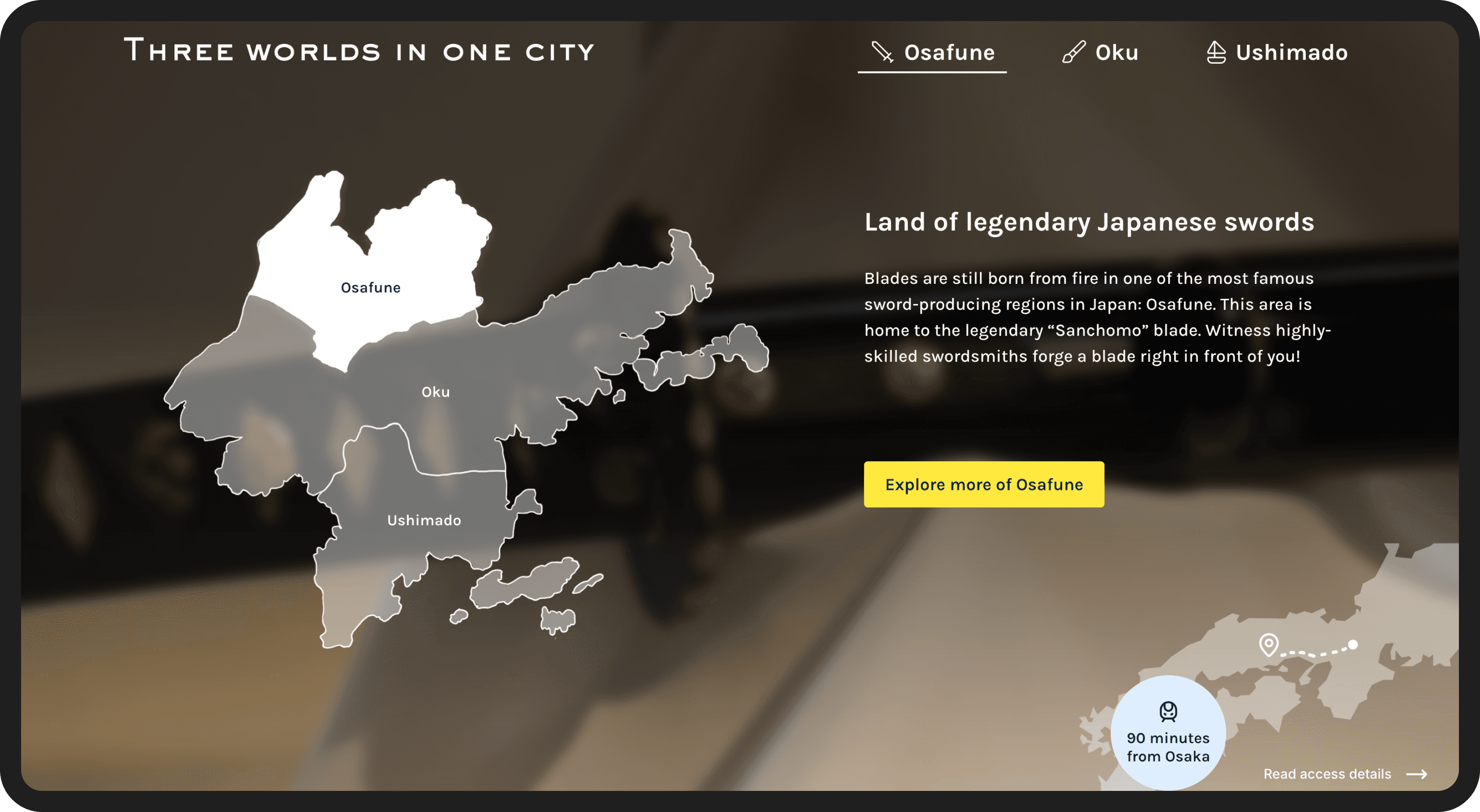
Interactive Map: Orients users and gives information on the 3 distinct regions
Seasonal Recommendations: Insights to local seasonal activities (based on current season)
Local Events: Shows when and how users can connect with the locals
Peek at Stays: Invites one to spend more time in Setouchi
Final Design
No code design & build
The new website had to close language gaps while avoiding information overload. I designed sections that showcase Setouchi's distinct identity, local involvement opportunities, and clear event details—directly addressing the pain points identified in research.
The website was fully designed and built in Framer, with no code (only low-fi wireframes were created in Figma). This exciting design challenge allowed me to immediately test the site and publish quickly.


User Testing Insights
"If I go here, I feel like I can experience things I never have before."
— Participant, usability session
Learnings
Navigating constraints & taking on multiple roles
Designed effectively within no-code constraints. Some of the interactive feature limitations taught me that reducing complexity can enhance user value.
Developed communication skills with non-technical government stakeholders. I framed decisions using outcome-focused language like 'faster trip planning' instead of design jargon.
Government projects can move slowly, so getting access to archives and permissions pushes the timeline. I worked around this block by focusing on other tasks and flexibly adjusting the deadline.
Adapted and strategically pivoted when the client presented a last-minute request: a new page featuring custom swords for which people can place orders.
